Roy Henry Vickers’ The Elders Are Watching

Roy Henry Vickers is quite simply one of the greatest living artists. The web doesn’t do justice to his work, because some of the images are rendered in such a way that the totality of the work cannot be seen from every position; you can’t just stare at them straight-on and expect things to reveal themselves. His work was the inspiration for my own logo, which was created for me by my friend Shahee.

He’s gotten into social media in a big way recently, with Facebook and Twitter, and now YouTube as well. One of his most famous works is called The Elders are Watching, and he’s done it beautifully and movingly in video form. You will like this.

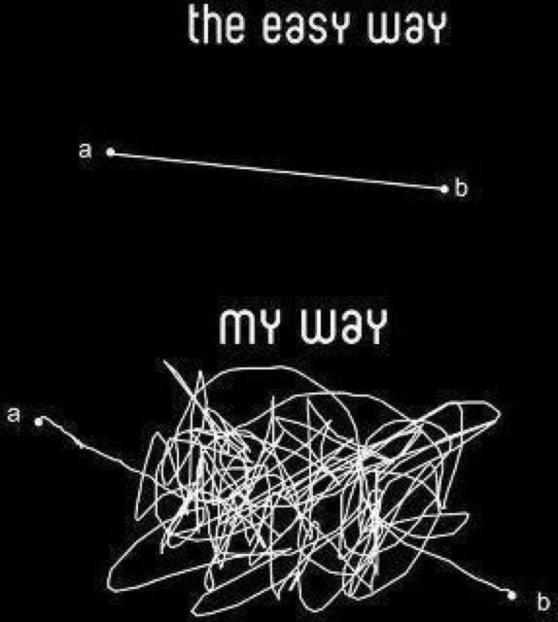
GPOY: Solution Mapping Edition

GPOY solution map

GPOY solution map

Among my friends there is a certain consensus of opinion, and they are unified in their belief that this is one of the smartest things I’ve ever said about myself: That, if I weren’t so confident in my ability to cope with crises, I’d put more effort into preventing them. Here we can see that principle expressed in the 21st Century’s highest art form, the Infographic.

Apropos of nothing, I will here list the words that I learned from the internet yesterday. You may find them amusing. Given my problem-solving style, I have no doubt I will find them critically useful at some point in the future.

As the great prophet Phyllis Diller once said, “I don’t merely believe in miracles. I rely on them.

  • auto-mythocredititis, otherwise known as believing all your own spin [from the Guardian]
  • opuloconfundosapiensis – the tendency to confuse having lots of money with being very clever [same source, and I can hardly wait to incorporate this into an attack on the 1% on a dilapidated cardboard sign for Occupy Vancouver]
  • mon-orchid, meaning having only one testicle. Not exactly sure how I will bring this into a political discussion, but then there is no low to which I will not stoop in the fury of a firefight, so who knows? I may even lay it on Christie Clark. [from a fascinating Fortean Times article on the blue dogs of Texas]

and yes, I do read an eclectic collection of sites recently. I got bored with the usual Gawker/Awl/Facebook/Twitter/Tumblr round and decided to branch out, starting with solid, hard news sites and ending with amusing ones. No idea why I’m so fascinated with portraiture lately, though.

GPOY Occupy Spring edition

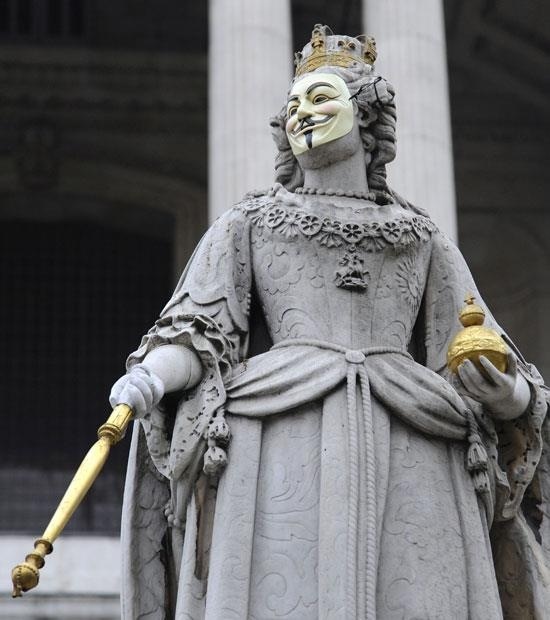
Queen Anonymous

Queen Anonymous

I! AM! The… oh waitaminit. Where’s my goddam hoodie? That’s better. All together now

I! AM! THE 99%!

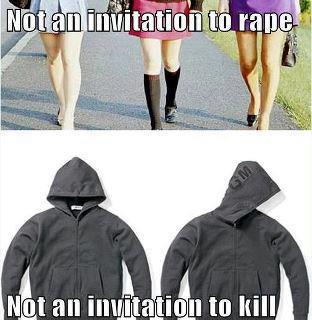
HOODIE UP in solidarity with Trayvon Martin and all young people who have been targeted, hurt, or lost their lives as a result of racial profiling.

Trayvon Martin was a 17-year-old African American high school student. He lived with his mother and older brother, and wanted to to study aviation. He was visiting his father in a gated community in Sanford when he was shot by the neighbourhood watch captain, George Zimmerman. Trayvon was wearing a hoodie, on foot and un-armed; he had been to the store during a break in the NBA game to get Skittles and iced tea. Prior to shooting him in the chest, Zimmerman had called the police to report Trayvon’s “suspicious” behavior (walking while black??) and insisted on pursuing him. Police have not arrested Zimmerman because he claims that he killed Trayvon in self-defense, under the protection of Florida’s “Stand Your Ground” law. Police also did not contact Trayvon’s family and registered him in the morgue as John Doe, in spite of having his cellphone in their possession when he was pronounced dead.

For full story – http://www.democracynow.org/2012/3/20/walking_while_black_florida_police_resist

———————————————————————

The hoodie is a symbol of how we are NOT subject to the same treatment, how some of us have to expect violence and negligence, not safety or protection, from institutions like the police because of systemic racism. In spite of how common and “trendy” the hoodie is, it retains associations with “danger” and “criminality” when worn by people of colour, especially those who are perceived to be poor/of lower economic class and therefore “not belonging” in particular areas.

Cultural racism means that mainstream society feels entitled both to treat people of color on the basis of racial stereotypes (which erases one’s individual character) AND to have ready access to people of color’s personal/private identities at all times (which makes one’s individual body hyper-visible).

Racial profiling in the form of policing, surveillance and incarceration affects many youth of color in the Lower Mainland from Arab, Muslim, South and/or Southeast Asian communities, and especially Indigenous and Black communities, who are already over-represented, with growing numbers, in Canada’s prison system.

Visit http://icouldbetrayvon.com/

STAND UP AND REMEMBER.
MAKE YOUR STORIES HEARD.
HOODIE UP.

———————————————————————-
Links to check out:

Video of parents of Trayvon Martin speaking http://is.gd/unCRaG

Video w/Brian Jones http://is.gd/S6ZKHQ

http://pandagon.net/index.php/site/comments/a-young-black-man-being-late

http://www.urbancusp.com/newspost/the-bullet-next-time-an-open-letter-to-my-unborn-black-son/

http://colorlines.com/archives/2012/03/koritha_mitchell_living_with_lynching.html

http://globalgrind.com/news/michael-skolnik-trayvon-martin-george-zimmerman-race-sanford-florida-photos-pictures

http://www.esquire.com/blogs/politics/trayvon-martin-news-7552519?src=soc_fcbk

http://racismschool.tumblr.com/post/19758690223/the-million-hoodie-march

http://www.npr.org/2012/03/24/149245834/tragedy-gives-the-hoodie-a-whole-new-meaning&sc=fb&cc=fp

http://www.guardian.co.uk/world/video/2012/mar/21/trayvon-martin-shooting-911-call
Dress! Code! In! Force!

Hoodie up!

Hoodie up!

catch you on the flip side

the flip side of this.

The flip side of the ability to wield physical beauty for political gain is…Occupy.

DSCN5495

Don’t get me wrong, I love the guy, but this just isn’t his best look. It isn’t anybody’s. The only things that could make it worse are Crocs and perhaps an ostentatiously large murse.

And much as it kills me to admit it, the look hasn’t changed in twenty, count ’em, twenty years.

I was reading (and strenuously disagreeing with) Kurt Anderson’s article in Vanity Fair about how styles have not changed in the last twenty years. I was thinking “how could anyone get it so wrong?”

And then I saw this.

1992, people. 1992.

God, we’re old.

picture this

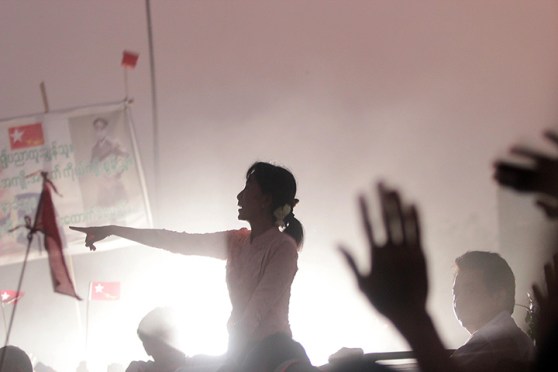
Aung San Suu Kyi

Aung San Suu Kyi

I’ve often wondered whether Nobel Prize Winner Aung San Suu Kyi would have risen to global fame (and a Nobel) if she hadn’t been beautiful. Yes, people think about these things. Well, you knew that. But some people talk about them, too, which is slightly more fraught.

John Molloy, the guy who wrote all those Dress for Success books in the early 80’s, said there was a greater correlation between the monetary success of Harvard grads and their height than there was between their success and their grades. We perceive good-looking people to be not just more attractive, but more intelligent, more diligent, and more moral than their homely peers. Those who listened to the Kennedy/Nixon debate on the radio felt Nixon had won, while those who saw it on television felt almost unanimously that Kennedy had trounced Richard “Flopsweat” Nixon.

And all this is not to say that she (and Kennedy, and those lanky Harvard grads) don’t deserve what they’ve gotten; it’s rather to say that beauty is power. And sometimes it’s hard not to resent that. While I’m glad to see it put to use for the cause of good here, how often has it been used to slip something by us that we should have stopped? How often, on the global stage, have we been desensitized and made victims by the presence of sheer physical beauty?

Today I don’t have any answers. I just hope I’m asking the right questions.