Literati are perhaps the least respected of professionals. Oh, sure, every doctor gets hit up at parties for a snap diagnosis freebie (Miss Manners’ advice? Reply “certainly, now if you’ll just disrobe I’ll examine you.” Hey, it WOULD liven up a party) but how many of them get “I’ve always been good with cutlery, probably would make a pretty snappy surgeon, doncha think?”
Writers? Editors? Every feeb who knows the alphabet has internalized that old “Everyone has one novel in them.” Yeah, maybe. But whoever said that (Confucius? Hesiod? Boccaccio? I wanna give that man a swiftian kick in the legpit region, I’m telling you) was careful not to claim it would be a good novel. Or even a novel one.
You see what I’m getting at here?
Few indeed are even the true the classics of literature that couldn’t be improved by the judicious exercise of editorial oversight. Think, for instance, how much better most of Thomas Hardy would be with a restrained sprinkling of snappy musical numbers. Think of how much more eagerly students would tear through The Canterbury Tales if they were a Nancy Drew/Hardy Boys mystery instead. Think: The Gulag Archipelago With Zombies.
Oh hey…
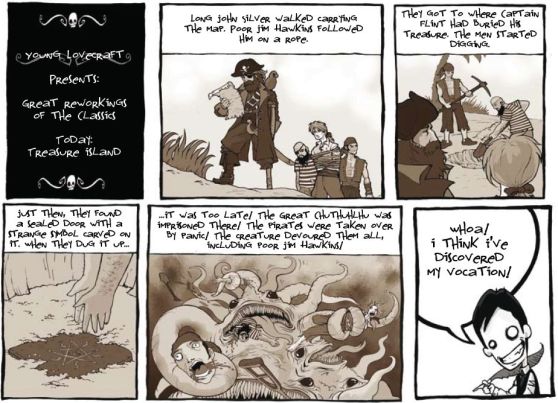
Where was I? Right, editors and improvement. Longtime readers of the ol’ raincoaster blog (for what crime can this be the inhuman sentence? I ask yez) will be aware that we at raincoaster HQ have long cherished a fondness for the old-fashioned Yankee consumptive Howard Phillips Lovecraft; fewer, however, will realize that in addition to being a talented author of eldritch tales™ Lovecraft was also an editor and collaborator of prolixity and profound talent.
Climb with us into the Wayback Machine, set the dial for “Arkham,” and behold the birth of a career:


Don't keep it to yourself!


 by that Leonardo of schlock,
  raincoaster