 So there I was in the hallway, sitting stoically at my Shebeen Club trade show table at the Surrey International Writer’s Conference.
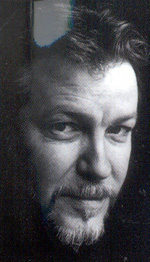
And there, in the room right in front of me, was Jay Clarke, retired Vancouver criminal lawyer, better known as Michael Slade, notorious writer of gory best-selling thrillers. He was talking with some consternation about his ancestors. Crofters, every one. Now, you’d think, particularly if you were naturally of a bloodthirsty turn of mind as indeed thriller writers must be, that one’s ancestors would naturally include a black sheep every few generations at least (mine seems to include them about every eight chromosomes, but then that’s the raincoaster gene pool for ya) but not in this particular case. While other people’s ancestors were out raping and pillaging, his were sitting by the fire knitting, and, when placed under duress, saying “och” alot.
And this did not take him to his happy place.
Finally, he found an ancestor who was a genuine black sheep. A scandalous ne’er-do-well who essentially fled the family home lest he expire at a young age of sheer boredom. Instead of doing whatever it is that crofters do (croftation? croffination?) he set out for the New World, with, I believe, an arrest warrant following him all the way to the Three Mile Limit.
Upon reaching the New World he did many things, but foremost among them was that he joined the Great Land Rush across the Prairies, hoping to stake out a decent living on the frontier of the Great Plains, then embroiled in the Indian Wars south of the border. The turmoil below the 49th had sent many bands to Canada to avoid the troubles, but moreover it sent some of the more bloodthirsty parties up, to avoid capture. Canada was, at the time, somewhat like Pakistan is today: a superficially lawful place where known enemies of the United States could take refuge, re-group, and re-arm before crossing the border and re-engaging with the enemy.
This made the Great Migration across the Prairies somewhat more dangerous than your common-or-garden trek a thousand miles across an unknown and largely unmapped land with a team of fragile animals all too ready to succumb to the workload, or the local pestilence along the way, leaving one stranded and dying of thirst or worse would otherwise be.
Not to mention the bootleggers. Then as now, they shot interlopers on sight.
So there he was, I think his name was Edward, trekking across the great grass plains with a mule and an ox as his Mutt-n-Jeff team, Conestoga wagon lumbering behind like a double decker sailboat of the wheaten sea, and no doubt a mongrel dog trailing mournfully along behind.
When suddenly…
over the horizon…
came a group of Indian warriors. Armed. Bloods. The dangerous kind. The kind that taught Custer a lesson he didn’t live long enough to forget.
“OhshitI’mdead,” thought Edward the Ancestor.
They surrounded the clumsy wagon and mismatched team, their war ponies standing shoulder-to-shoulder, glittering eyes silently mocking the draft animals for their plodding slowness.
The leader approached.
“Ohshit,” thought Edward. “He wants my scalp and then they’ll take everything I have and ride away and nobody will even know I’m dead.”
And this did not take him to his happy place.
“Hail,” said the young Indian. “Do you have tea? Do you have tobacco?”
…
“Uh, no,” replied the ever-so-slightly petrified Edward.
“I see,” replied the brave, who immediately remounted his horse, signalled to his warriors, and led them away at a gallop.
What was that? thought Edward the Vastly Relieved, as he sat there on the wagon bench, reins as slack as his jaw. The ox and mule began to graze, unconcerned.
After a time, Edward recovered enough to pick up the reins and urge the team forward through the heavy grass, towards the settlement of Fort Edmonton, the Mountie outpost established to bring Law’nOrder to the godless Prairies; the largest settlement in the territory was actually Fort Whoop-Up, which was not an authorized agent of the Hudson’s Bay Company, but rather a post established by the Yankee bootleggers, who traded whiskey to the Natives through a hole in the palisade: Canada’s first drive-through window. Then as now, the Americans were foremost in systems management and streamlining the rapid delivery of supply-chain essentials.
Meanwhile, back at the Conestoga wagon…Edward was approaching Fort Edmonton. He could see the walls wherein he hoped to find safe refuge. His relief was complete and his hopes were rising, when he heard a noise from behind him.
Turning, he saw, much to his consternation, mortification, and horrification, that the band of Indians who had left him alive were returning after him at a gallop.
Edward was many things. Stupid was not one of them. He picked up his whip and he flailed that pathetic team as if his life depended on it, which he was quite certain it did. They responded as only a tired mule and ox team can respond: they went what the hell? and then broke into a bone-jarringly mismatched gallop, headed straight for the fort and presumable refuge.
If only they reached it in time.
They did not.
Surrounded once again, Edward thought momentarily about doing something truly dramatic, but he managed to stifle the thought and simply sat, stoically waiting for his fate.
The leader approached. He dismounted from his pony and stepped towards the wagon, hand outstretched. In the hand were two pouches.
Tea. And tobacco.
Don't keep it to yourself!



 raincoaster