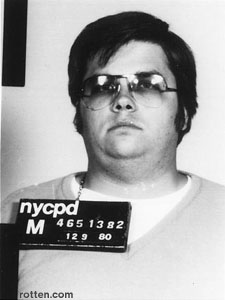
 In the comments section of my post on the worst school massacre in US history, I posted this:
I have been thinking, putting the profile of these mass murderers together with my theory of the popularity among so-called Zeta Males of Second Life, World of Warcraft, and other such virtual life forums. They fit very well together, but what are the effects?
Does participation in a community such as Second Life give such people (ego-driven failures, basically) enough gratification and recognition that it reduces their inclination to turn to violence in the real world?
Now that, if I say so myself, is an interesting question.
And so it is.
Let’s review a few things before we get into a discussion.
First, mass murders of the Virginia Tech and Bath Disaster proportions are generally carried out by tightly-wound, ego-driven men who would conventionally be described as failures. They have high ego but low accomplishment, and the disparity between these two drives them literally insane. They account for the difference between their self-opinion and their status by convincing themselves that various conspiracies or forces are working against them.
In Kimveer Gill’s case, he settled on bullies, although he himself had not been bullied; he essentially picked an excuse that was popular with his online peer group, who commonly complained about being bullied. In Andrew Kehoe’s case, he believed it was the School Board and the taxation system’s fault he was facing bankruptcy, ignoring the fact that his farm failed to prosper because he farmed according to his (inaccurate) theories rather than according to sound principles. In Cho Seung-Hui’s case, he blamed the rich and debauched generally, specifically stating repeatedly that the killing was their responsibility, not his.
These are Zeta Males.
Now, let’s look for a moment at the post I did about Maslow’s Hierarchy of Needs. I discovered that, even though I have difficulty affording the basics like food and shelter (and my internet bill is three months overdue right now) I am highly self-actualized and recognized by the community. According to standard theory, this should be impossible, but obviously it isn’t. It’s because of this blog. It is because of the internet. It is because I can go online and know that I will be seen and heard and respected if I prove myself, which I know I can do in this arena. I have a record of accomplishment in the cybersphere.
This is precisely what is so attractive about Second Life. In another forum, there was a lively discussion about who joins SL, with those less sophisticated in the ways of the internet assuming that it would primarily be populated with teenagers. This immediately seemed wrong to me and, indeed, proves not to be true; it seemed obvious that Second Life was most attractive to mature people who’d failed in First Life. It’s a Zeta-being magnet, because it gives you the opportunity to hit REPLAY and live your life over, and if you don’t like the way it’s going, you hit DELETE and create a new life. This is not something that those accustomed to success would find compelling.
Now, the question becomes, does participation in online worlds fill these people’s needs for recognition and somehow bleed off the deadly pressure, or do they fail even online, thus reinforcing their destructive tendencies?
If there’s hard information out there about this, I haven’t found it. I would love to hear from psychologists tracking membership in these online forums, though, and what I am hoping to hear is that it can transform people from embittered, dangerous and irrational outsiders into something closer to a sane human being.
I want to be optimistic about this…but…
 ::
::  ::
::  ::
::  ::
::  ::
::  ::
::  ::
::  ::
::  ::
::  ::
:: 
Don't keep it to yourself!


 raincoaster